
Mind the Gap Winter School 2026
A six-day intensive lab on methods, measurement and design in psychological, social, behavioural, clinical and human sciences.
For PhD students, postdoctoral researchers, university researchers and professors in psychology, economics, computer science, engineering and related fields working with human data.
What is Mind the Gap Winter School?
An intensive, project-centred week to rethink how you design, measure and analyse research on human behaviour and experience.
Your project at the centre
Bring your own PhD, postdoctoral or lab project and work on it throughout the week: from research questions and design choices to measurement models and analysis plans.
Method, not just tools
Go beyond tutorials and isolated techniques. Learn how psychometrics, advanced statistics, VR and immersive methods, ESM and psychophysiology fit together in a coherent methodological vision.
A clearer research workflow
Leave with a sharper set of questions, stronger designs, and a transparent workflow you can explain, defend and replicate in your own department, lab or organisation.
Who is it for?
Mind the Gap Winter School is designed for researchers who work with human data and want to rethink their methods – not just add more techniques.
Early-career researchers
- PhD students designing or revising their thesis projects.
- Postdoctoral researchers and research fellows planning new studies.
- Researchers moving into more advanced methods and designs.
Established academics & professionals
- University researchers and professors leading research groups.
- Scholars in psychology, economics, computer science, engineering and related fields working with human behaviour and experience.
- Professionals in evaluation, UX, applied research or innovation who want a stronger methodological backbone.
No, you don’t need to be a stats wizard.
Basic familiarity with empirical research is expected, but curiosity and a willingness to question your current assumptions are more important than perfect technical skills.
What you will get
Not just more techniques, but a clearer, more coherent way of doing research – built around your own project.
Stronger research design
Sharpen your research questions, clarify your hypotheses and align constructs, measures and analyses in a single, coherent design – instead of a patchwork of disconnected decisions.
Hands-on with contemporary methods
Work directly with psychometric models, advanced data analysis, VR and immersive setups, ESM and psychophysiology – always linked to concrete questions about human behaviour and experience.
Feedback & a research network
Receive structured feedback from faculty and peers, define the next steps for your PhD, postdoc or lab, and connect with an international community of method-driven researchers across disciplines.
How the Winter School works
Six intensive days in a retreat setting, combining core sessions, labs and mentoring – all built around your own research project.
A typical day at Mind the Gap
Morning – Core sessions
Short, focused inputs on design logic, measurement models, data analysis and contemporary methods (VR, ESM, psychophysiology) anchored to real research examples.
Afternoon – Project labs
Hands-on work on your own project: refining questions, sketching designs, testing measurement strategies, discussing analytic options in small groups.
Late afternoon & beyond
One-to-one mentoring slots, informal discussions with peers and faculty, space to digest feedback and plan the next steps for your research.
Core components of the week
Core methodological sessions
Structured inputs on measurement models, data analysis strategies and study design – always connected to concrete decisions you face in your own work.
Hands-on labs
Practical sessions on psychometrics, advanced analysis, VR/immersive setups, ESM and psychophysiology, with guided exercises and space for questions.
Project clinics & mentoring
Small-group reviews and one-to-one mentoring moments focused on your project, where you can stress-test ideas and clarify methodological choices.
Community & reflection
Time and structure to step back, reflect on your research practice and connect with an international group of researchers facing similar methodological challenges.
Programme snapshot
Six days structured around a set of modules that connect design, measurement, analysis, immersive methods and psychophysiology into one coherent workflow.
Research questions & design logic
Clarifying what you are really asking, which assumptions you are making, and how to build designs that truly answer your questions instead of just following disciplinary habits.
Measurement models & scales
Working with psychometric models, dimensionality, reliability and validity, and learning to align constructs, items and indicators with your theoretical framework.
Advanced data analysis
Exploring multivariate models, structural and network approaches and model-based reasoning, with an emphasis on transparent analytic decisions rather than black-box procedures.
VR, ESM & immersive methods
Understanding when and how to use VR, 360°/immersive media and Experience Sampling Method to collect ecological, time-sensitive data on human behaviour and experience.
Psychophysiology & biosensing
From signals such as GSR, HRV or EEG to meaningful research questions: designing studies, synchronising physiological and behavioural data, and avoiding common interpretative pitfalls.
Your integrated research workflow
Putting everything together around your own project: from question to design, measurement, analysis and reporting – with a clear, defensible and reproducible workflow to take back to your lab or department.
What past participants say
Previous editions of Mind the Gap have brought together researchers from different disciplines who share the same need: a deeper, more conscious way of doing research.
“It is important to take a step back and have solid methodological foundations.”
“It was very inspiring, very beautiful, introspective too, and I would say it somewhat guided us through the research path.”
“This Summer School helped me to put my ideas in order in a transversal sense.”
Faculty and mentoring
You will work closely with researchers experienced in psychometrics, data analysis, VR and immersive methods, ESM and psychophysiology – with your project at the centre of the work.

Pietro Cipresso
Works at the intersection of psychometrics, computational modelling, virtual reality and psychophysiology, developing tools to measure emotions and behaviour in complex, technology-mediated contexts.

Alice Chirico
Studies complex emotions such as awe and the sublime, immersive experiences in VR, creativity and flow, designing experimental paradigms that link experience design, measurement and well-being.
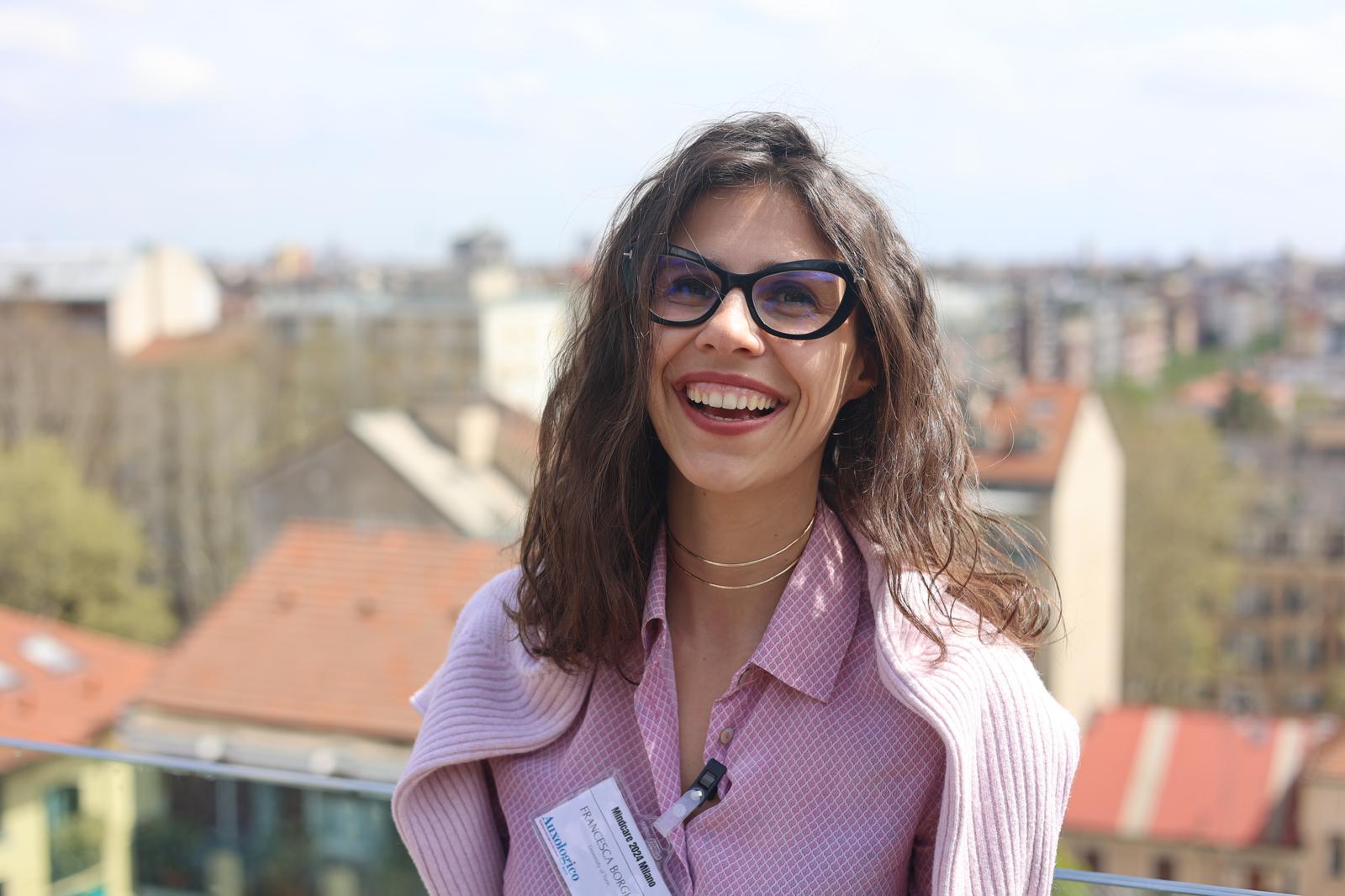
Francesca Borghesi
Focuses on statistics and psychometrics, affect dynamics and mental flexibility, often using VR and 360° environments to study how emotional states change over time.
Mentoring and project clinics
Throughout the week, you will have multiple opportunities to discuss your project with faculty and peers – not only in plenary sessions, but also in smaller, focused project clinics.
- Small-group sessions led by faculty on specific methodological challenges.
- Scheduled one-to-one mentoring slots to go in depth on your project.
- Open moments for questions, informal feedback and idea testing.
A safe space for methodological questions
The Winter School is designed as a space where you can openly discuss doubts, tensions and uncertainties around your methods – including those that rarely fit into standard courses or conferences.
You are encouraged to bring preliminary ideas, partial data or ongoing studies: the goal is not to show “perfect” work, but to make your research stronger.
Program at a glance
Six intensive days combining core sessions, hands-on labs, a field trip on Lake Orta and project-focused workshops – all structured around your own research.
Monday – Foundations
Morning: Foundations of experimental research, designing rigorous
studies, building testable hypotheses, overview of methods, and a hands-on demo with VR,
physiological sensors and ESM.
Afternoon: Research Design Workshop (with faculty guidance) focused on
outlining the design of your own project and receiving group feedback.
Tuesday – Hypotheses & methods
Morning: From theory to testable hypotheses, operationalisation and
method selection.
Afternoon: Hypothesis Workshop where you formulate and refine
hypotheses for your project in a peer-review format.
Wednesday – Data in the real world
Morning: Applied data collection methods, planning recruitment,
logistics and troubleshooting in real studies.
Afternoon: Field trip to Lake Orta with a scientific walk,
creative methodological discussions and informal mentoring.
Thursday – Building your research A–Z
Morning: Constructing your experiment from A to Z: analytical–statistical
workflow, identifying and fixing validity issues.
Afternoon: Writing & publishing workshop on conceptual, systematic and
scientometric papers, journals and academic career strategy.
Friday – Preregistration & GLM
Morning: Preregistration in practice and introduction to the General
Linear Model (GLM) using Jamovi and R, with hands-on exercises.
Afternoon: Applied statistics workshop: running and interpreting GLM
models, linking analysis decisions back to your design.
Saturday – Pitching your research
Morning: Pitching workshop on scientific storytelling, how to present
your research in a few minutes, and live practice with feedback.
Afternoon: Wrap-up and departures.
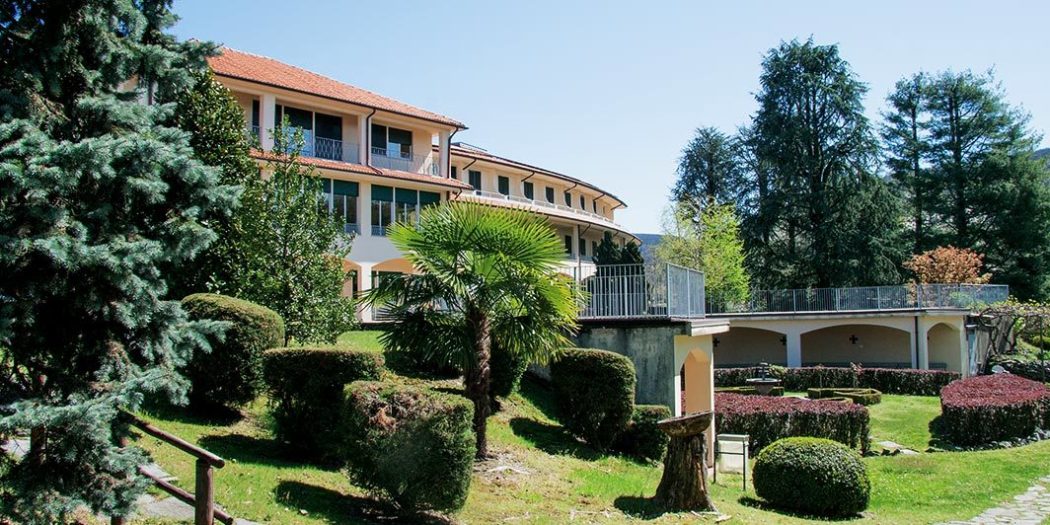
A retreat-style setting on Lake Orta
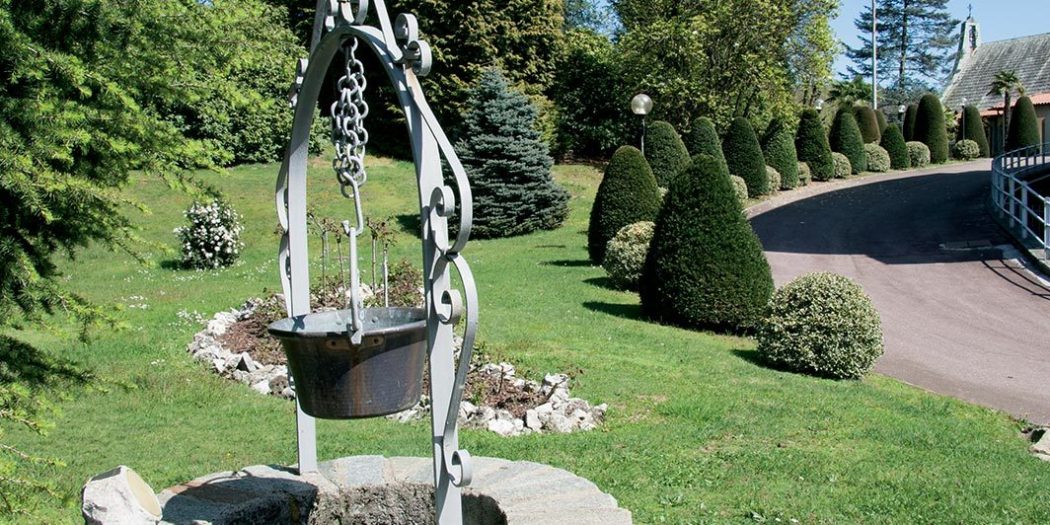
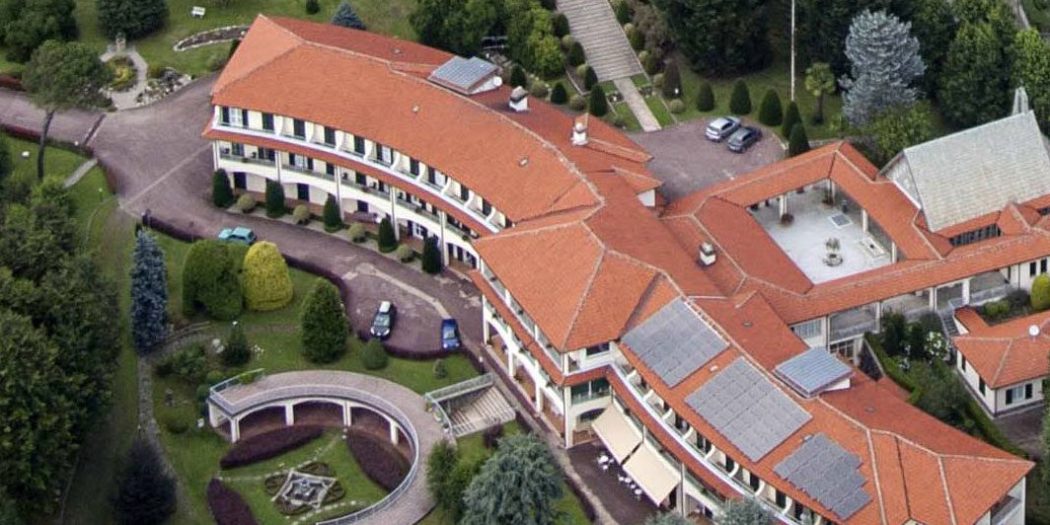
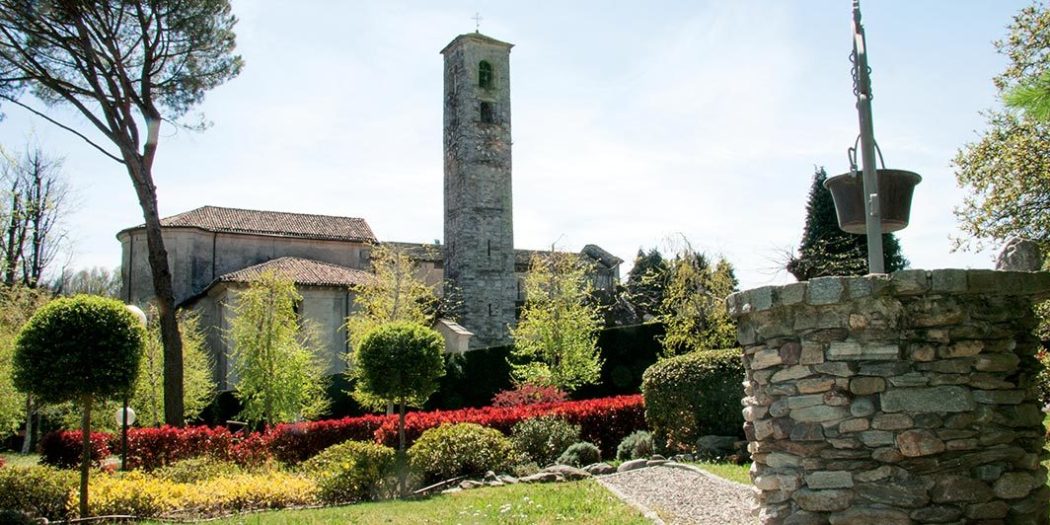
The Winter School takes place in Armeno, a quiet hill village above Lake Orta in northern Italy: an intimate setting that combines intensive work with an inspiring landscape.
Why this place?
Armeno is a small historical village in the hills above Lake Orta, surrounded by greenery and close to one of the most peaceful lakes in northern Italy. It offers the kind of calm, human-scale environment that is hard to find in big conference venues.
The setting is designed as a retreat for thinking: space to focus on your project, engage in conversations with peers and faculty, and step back from everyday academic noise while still being a short distance from the lake and its landscape.
- Quiet environment away from daily distractions.
- Common spaces for informal discussion and collaboration.
- Optional social and outdoor activities in the Lake Orta area.
Practical information
Key details to help you decide and plan your application to Mind the Gap Winter School 2026.
Dates & place
- Dates: 26–31 January 2026
- Location: Armeno, Lake Orta, Italy
- Working language: English
- Group size: max 20 participants
Fee & what is included
The participation fee covers the full Winter School experience:
- All teaching activities (core sessions, labs, project clinics, mentoring).
- Access to VR, ESM and psychophysiology equipment during supervised sessions.
- Course materials, readings and digital resources.
- Accommodation for the whole period of the Winter School.
- Meals (board) during the Winter School.
- Local transport related to Winter School activities during the week.
Standard fee: € 1,600
Not included
The following costs are not covered by the fee:
- Travel to and from Armeno / Lake Orta (flights, trains, long-distance transport).
- Accommodation or meals outside the official Winter School dates, if you extend your stay.
- Personal expenses and optional free-time activities not organised by the school.
Selection & application deadline
To keep the Winter School highly interactive, participation is limited to max 20 people. Selection is based on:
- Your motivation and fit with the spirit of the Winter School.
- The relevance and coherence of your current or planned research project.
- A balanced mix of disciplines, backgrounds and career stages.
Application deadline EXTENSION: 16 January 2026 (23:59 CET).
How to apply
The application is fully online and takes just a few steps. Take the time to clearly describe your project and why you want to join.
Application steps
-
Fill in the online application form.
Use the form linked below to provide your basic information and academic position. -
Describe your current or planned research project.
Paste or upload a short abstract of your project (focus, main questions, current stage). -
Explain your motivation.
Tell us why you want to attend the Winter School, what methodological issues you are struggling with, and what you hope to work on during the week. -
Indicate your fit with the school.
Briefly specify your background (e.g. psychology, economics, computer science, engineering, social/behavioural sciences) and how you currently work with human data. -
Submit before the deadline.
Make sure you send your application by 7 January 2026 - DEADLINE EXTENSION 16 JANUARY (23:59 CET).
What happens after you apply
- You receive an automatic confirmation email right after submitting the form.
- After the deadline, the committee reviews all applications based on motivation, project coherence and fit with the school.
- You will receive a notification of acceptance or non-acceptance by email, with further instructions on how to confirm your place and pay the fee.
- If you are accepted and part of The Way community, the reduced fee will be applied automatically when finalising your registration.
You do not need to have a perfectly polished project to apply.
The Winter School is precisely the place to clarify your ideas, strengthen your design and make more conscious methodological decisions – even if your project is still evolving.
Frequently asked questions
A few quick answers to common doubts about Mind the Gap Winter School.
Do I need advanced statistics skills to participate?
No. You should be familiar with basic empirical research methods, but you do not need to be an expert in all the techniques covered. Curiosity and willingness to work on your methodological choices are more important than advanced technical skills.
Can I apply if my background is not in psychology?
Yes. The Winter School welcomes participants from economics, computer science, engineering, social and behavioural sciences and other fields, as long as your work involves human data and you are interested in methodological reflection.
Is the Winter School suitable if my project is still at an early stage?
Yes. Having a clear project idea or a developing study is enough. The school is designed to help you clarify questions, refine designs and make better measurement and analysis decisions – even if you are not yet collecting data.
What is the working schedule during the week?
You can expect morning core sessions, afternoon labs and project clinics, plus time for individual work and informal discussions. It is an intensive week, but designed with breaks and space for reflection.
Will I receive a certificate of attendance?
Yes. Participants who complete the Winter School will receive a certificate of attendance, which you can use for your CV or institutional reporting where relevant.
Is accommodation organised by the school?
Yes. Accommodation and meals during the Winter School are included in the fee. Further details about the venue and room arrangements will be shared with accepted participants.
What happens if I am accepted but cannot attend?
If you realise you cannot attend after being accepted, please let us know as soon as possible so we can offer the place to someone on the waiting list. Information about payment deadlines and cancellation policy will be included in the acceptance email.
Ready to rethink your way of doing research?
If you want to move beyond isolated techniques and build a coherent, reflective research practice around your own project, Mind the Gap Winter School 2026 – Lake Orta Edition is for you.
Dates
26–31 January 2026
Place
Armeno, Lake Orta, Italy
Spots
Max 20 participants
Deadline
7 January 2026 - DEADLINE EXTENSION 16 JANUARY 2026 · 23:59 CET
Standard fee: € 1,600 - all included (tax, room and board)